
Family Fun: Tips for Bringing Kids to the Museum
The CAT welcomes visitors of all ages, including very young children! Want to engage your little ones at the museum, but not sure where to start? Here are some suggestions to help make the most of your visit:
Know before you go
Food and drink are not allowed in the museum, so please leave all snacks and water bottles in the car. The museum has a water cooler near the restrooms for visitor use.
Breast and bottle feeding are allowed throughout the museum. If you prefer a private area, our staff will show you where to go.
We have changing tables and stepstools in the men’s and women’s bathrooms. If you need a single-user bathroom, just ask staff.
If helpful, review our social narrative in advance of your arrival.
Don’t worry about short attention spans—if you are only in the gallery for 10 minutes, that’s fine! The museum is free and you can always come back.
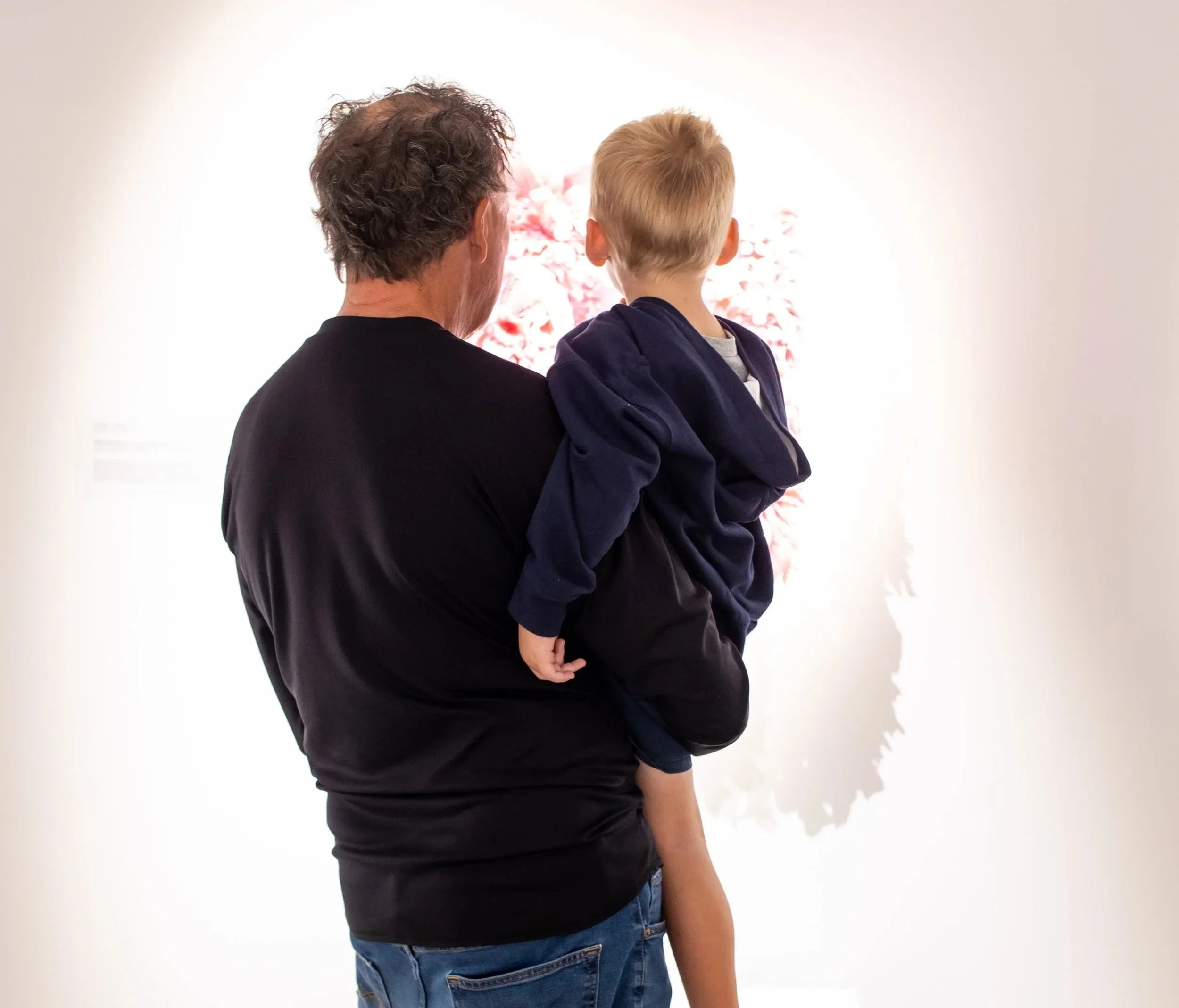
Museum manners
Before entering the museum, review expectations with your kids. Ask children to use walking feet, calm bodies, and indoor voices once they go inside.
If you have toddlers, make sure there is a designated adult in your group who will hold their hand or carry them while you are in the gallery. Ask older kids to use “museum pose”—hands clasped behind their back—while they are near artwork.
Explain to your children why we can’t touch anything: not only is the art breakable, but our fingers have oils on them that would leave grime on the artwork…yuck! You can illustrate this point by showing them smudge marks from fingerprints on your phone screen.
Consider breaking up the time you spend in the gallery by visiting our Family Nook, where you can read, sketch, and play together. Or, lay on the floor in the Pergola Ceiling room and talk about the shapes and colors you see in the glass above you.
Engage and converse
Believe it or not, you don’t have to know anything about art to have a meaningful time at the museum with your child! When you are in the gallery, model what it looks like to be curious and have personal opinions. Be ok with not having all the answers.
Let your child lead. Spend time looking at the artworks they are drawn to. Taking a seat together (on the floor or a bench) in front of an artwork is a great way to calm wiggles and increase focus.
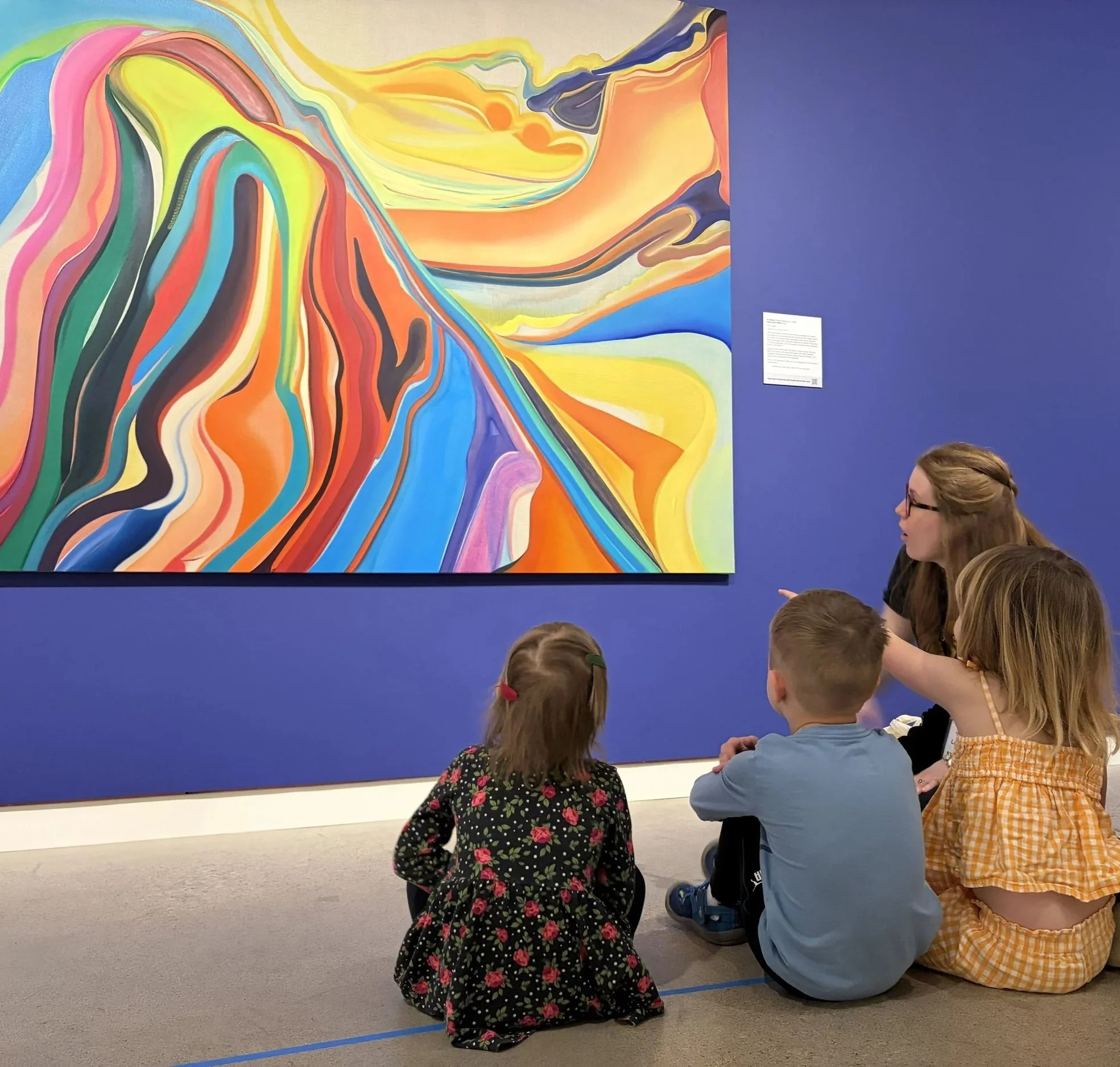
Once you’ve chosen an artwork to focus on, talk about it! General questions you could ask include:
What is special about this artwork?
What feelings does this artwork give you?
Does this one remind you of anyone / any place we know?
Would you want to have this artwork in your room?
If you could give this artwork any title, what would you want to name it?
You can also give children prompts as simple as “Show me one that you really like!” “Now, show me one you really DON’T like.”
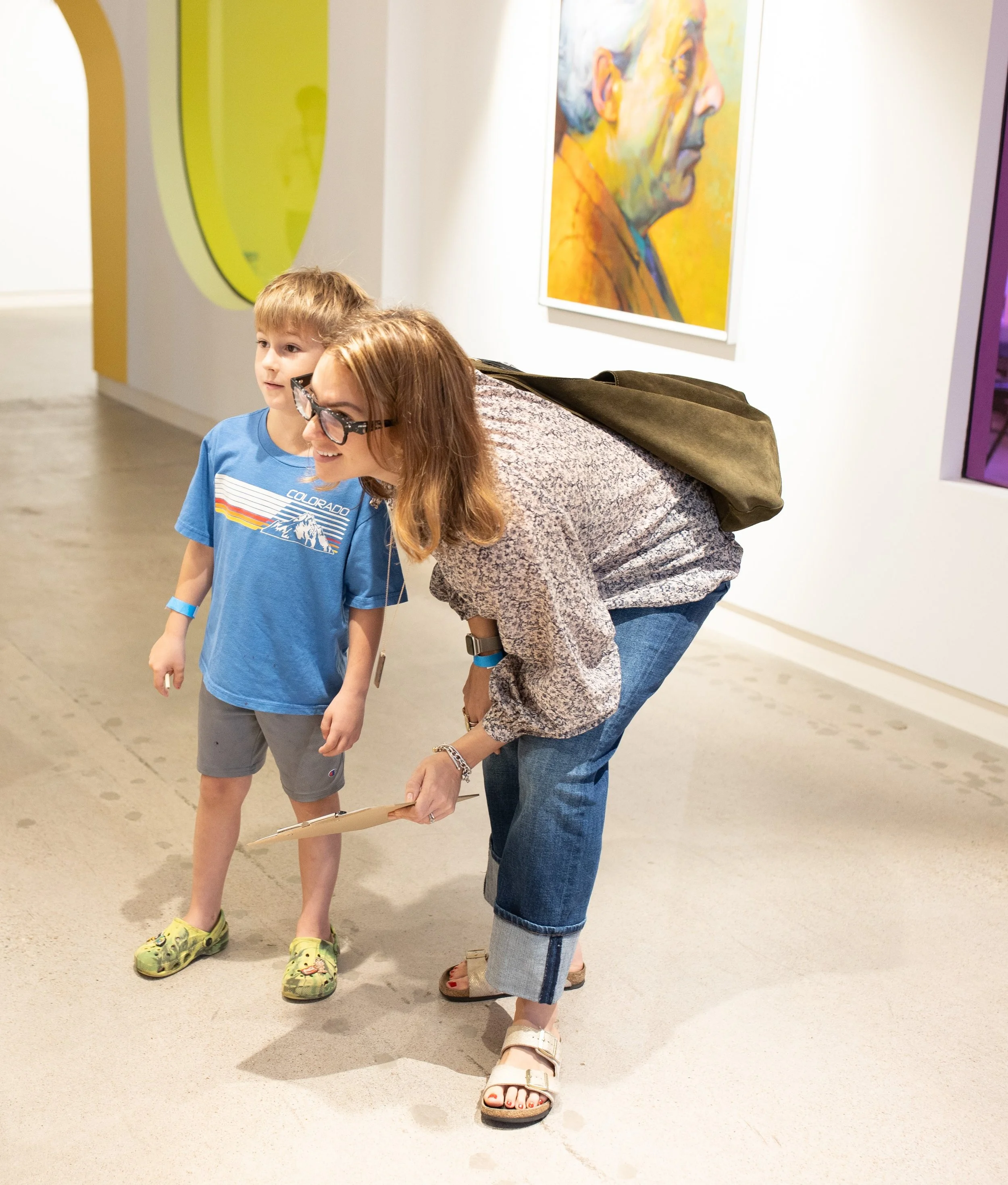
More complicated prompts for older children might include:
Show me an artwork that represents a world you’d like to move into.
Show me an artwork that represents a hope you have for your future.
Show me an artwork that you’d want to look at when you’re sad.
Show me an artwork that reminds you of yourself.
Make it a game!
Art museums don’t have to be serious and quiet. We welcome the joyful noise of families having fun together in the gallery.
Here are some playful activities you can try:
Color Hoorays. Before you enter the gallery, let each person in your group choose a color that they will root for. Throughout your visit, whenever someone spots their color in an artwork, cheer and give them high-fives.
I Spy! What interesting things will you find? As you play, remember to stay at least an arm’s length away from the artwork. This means that rather than pointing at small details, you’ll need to practice using descriptive language to verbally indicate what you’re looking at.
Voting. Let kids know it’s ok to not like everything – in fact, having preferences is encouraged! At each artwork that you discuss together, have everyone vote thumbs up / thumbs middle / thumbs down. Discuss why you voted as you did.
Strike a Pose. Try mimicking the artwork with your bodies. What shapes or poses do you see in the artwork? How can you work together as a group to re-create those forms?
Soundscape. Look carefully at all the details in an artwork and imagine what each element might sound like. Get creative! Assign each person in your group a specific sound, then, on the count of three, make your sounds at the same time to bring the artwork to life.
Creative art making
Capitalize on the wonder your kids felt at the museum by encouraging them to create something inspired by what they saw. This could be sketching while you are in the museum (we have pencils and paper in our Family Nook), or doing something more messy back at home.
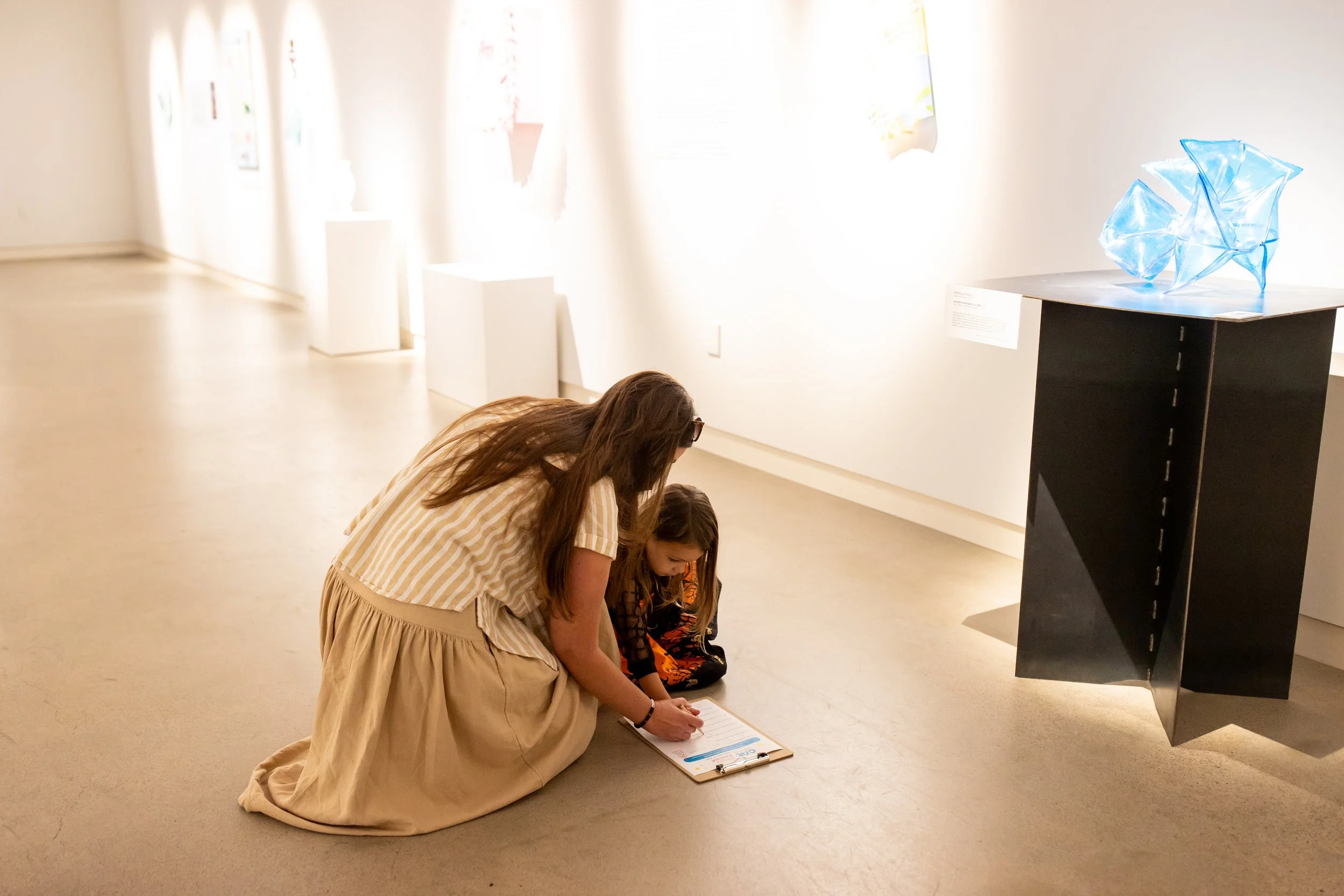
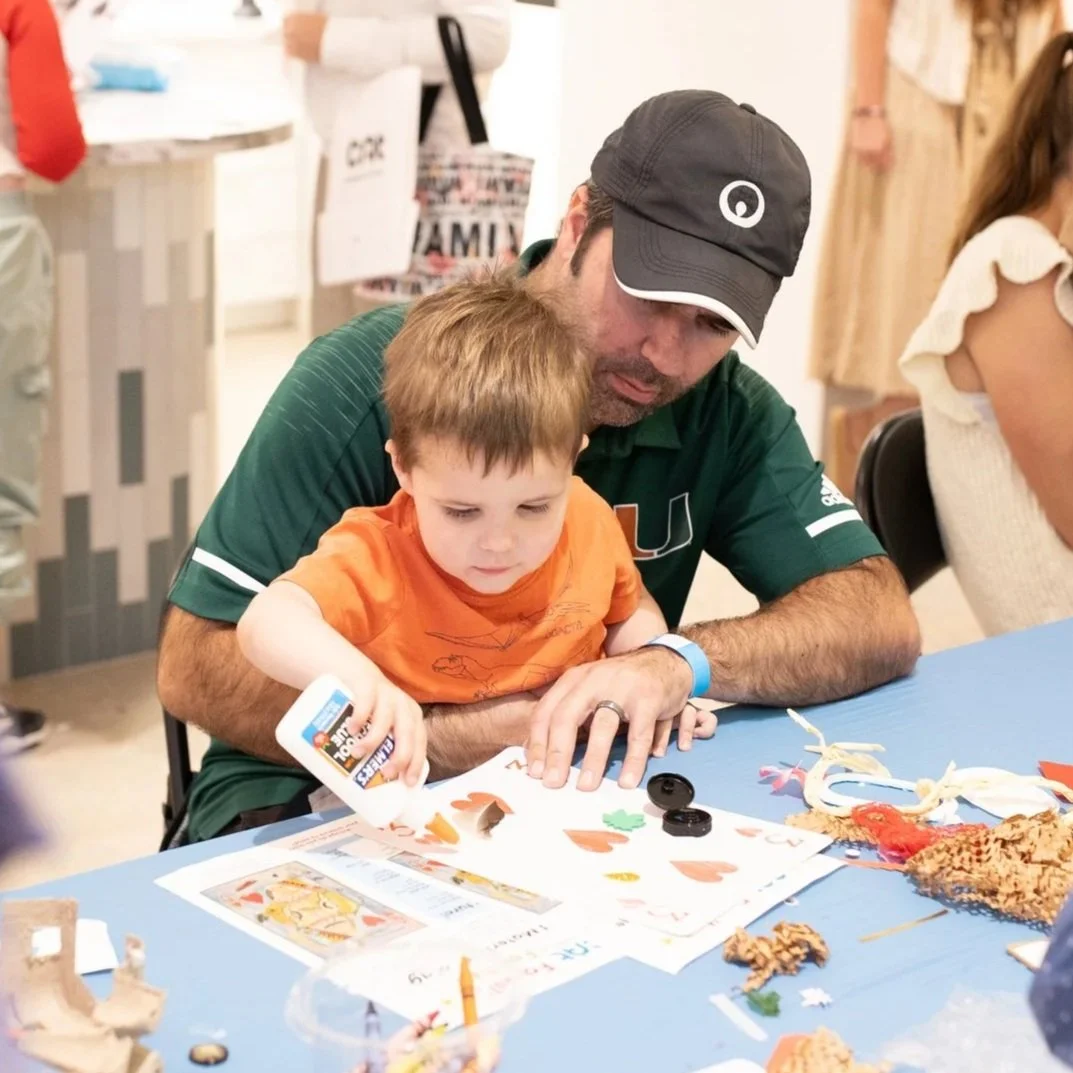
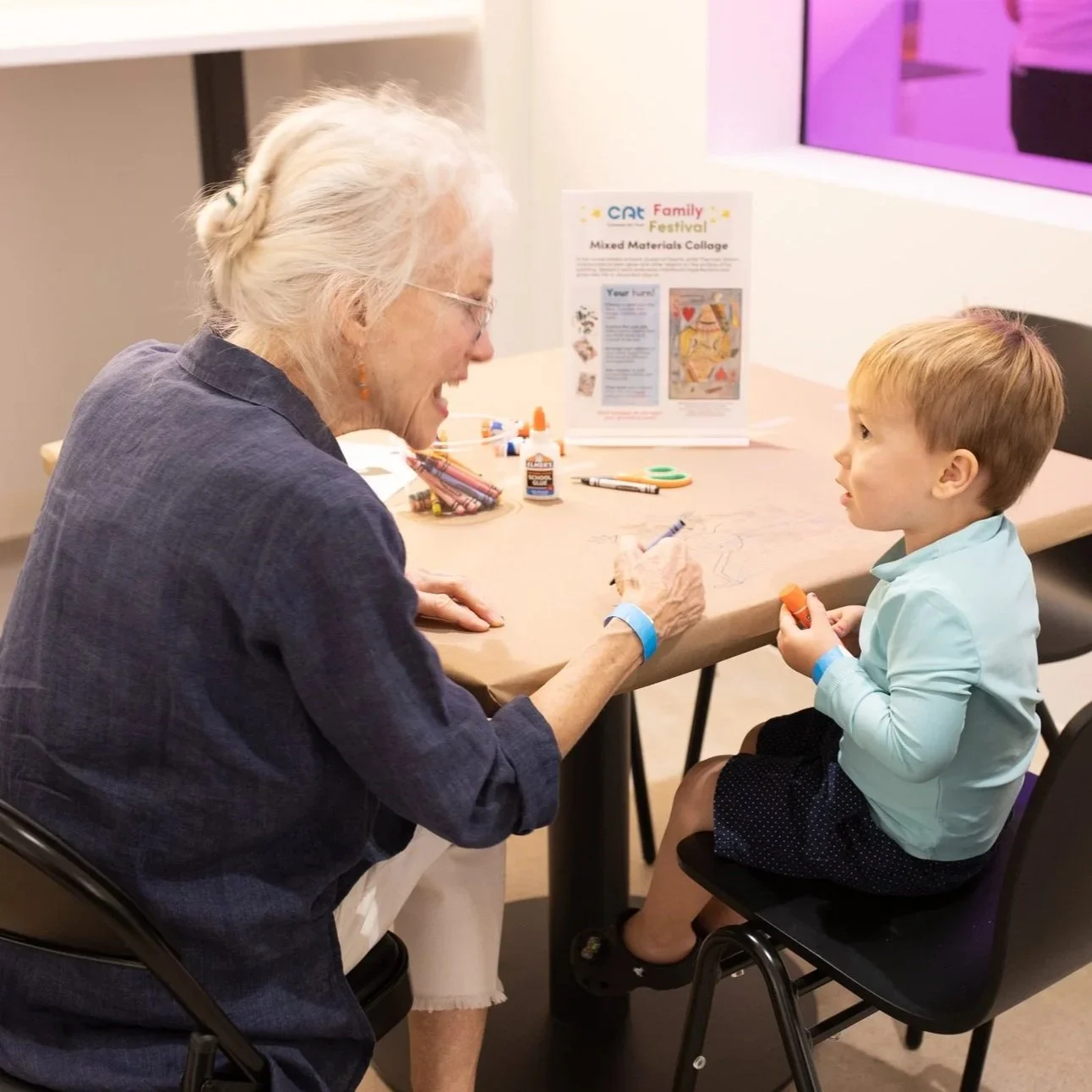
While they are working on their projects:
Resist the urge to control or dictate how your child is creating. Be ok with imperfection and remind yourself that the process is much more important than the final product.
Engage with them as they create, asking them to reflect on the process along the way.
Try questions like “tell me about your plan for this project” as they begin, “what choices are you making?” as they work, and “what was your biggest challenge in creating this?” when they finish.
Even a simple “Tell me about your artwork!” can go a long way in encouraging them to articulate their thinking.
When presented with toddler or preschool artwork that looks like a bunch of scribbles, offer your own interpretations based on what you notice, using exciting describing words to elevate their work. This will help build both their vocabulary and their self-esteem!
For example, “I’m noticing how powerful / quiet / shy / bold / angry / joyful your lines are,” “You created some interesting contrasts here,” “I like your energetic marks on the paper,” or “I see colors that are swooping / curling / zigzagging / flowing / swimming.”
Tie it back to what you saw at the museum, making connections between their project and the artwork you discussed together.