
Making Connections at the CAT: Engaging People with Memory Loss at the Museum
On select Tuesday afternoons at the CAT, I brew a pot of decaf coffee and fill a carafe with hot water for tea. I spread out a black tablecloth, set down a large tray of assorted cookies, and turn on some soft jazzy music. Everything set, I wait for my guests to arrive.
Some come bounding in energetically; others make their way a bit more slowly. As everyone settles in, we gather together around the table. We take time to enjoy the sweets and drinks, chatting and catching up, or getting to know each other for the first time. After we’ve finished our refreshments, I lead the group into the gallery to begin a guided tour.
There, we study four or five artworks in depth. We discuss what we see, how it makes us feel, and speculate about the artist’s intent. These conversations are often quite sophisticated, with my guests pointing out details I’ve never noticed, making astute observations, and—always, always—infusing the conversation with humor, levity, and an indomitable joie de vivre.
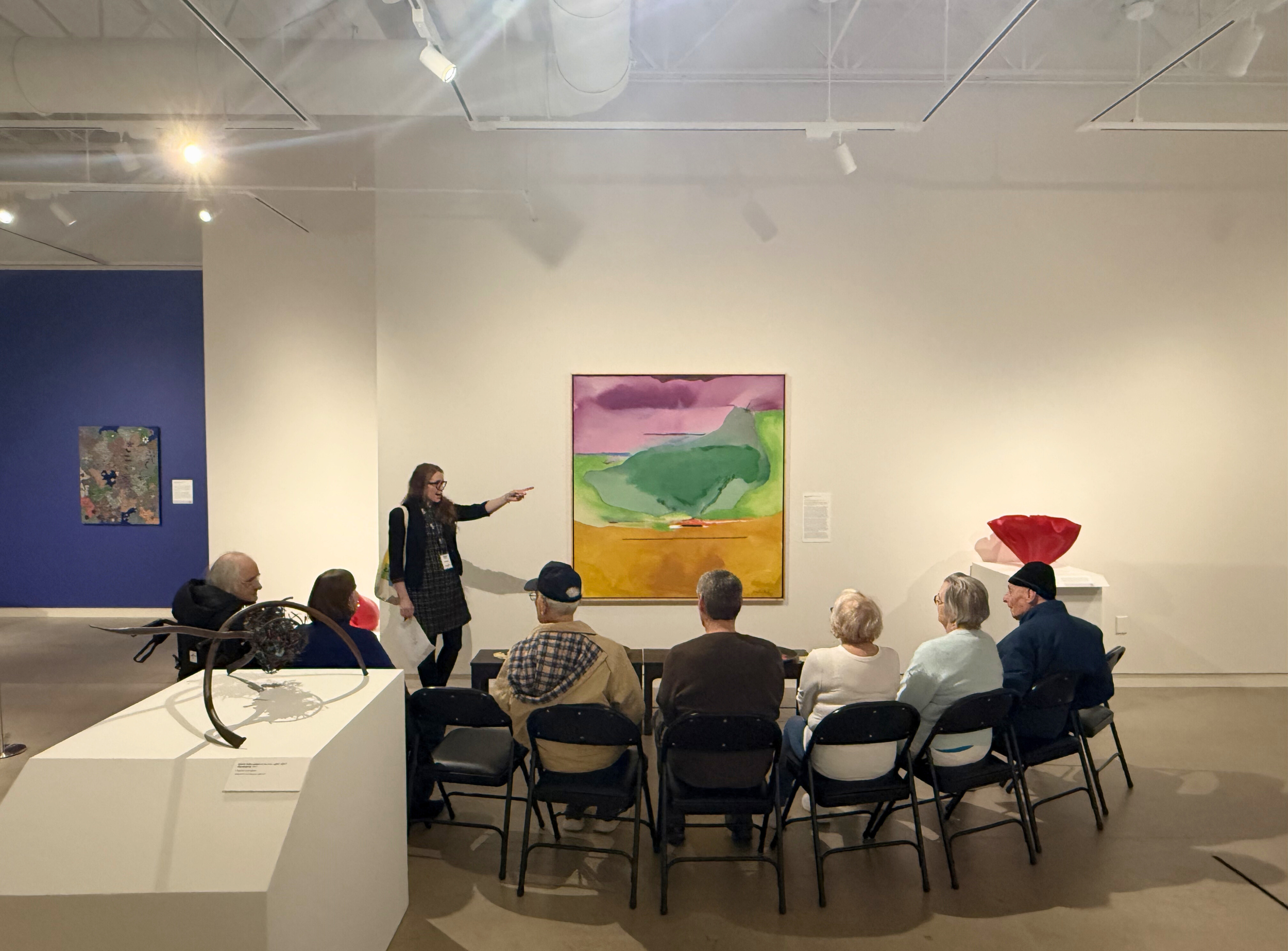
Discussing the colors of Helen Frankenthaler’s painting.
When the guided tour concludes, participants linger in the gallery, exploring other artworks that catch their interest and returning again to ones we’ve discussed together. After ample study of the exhibition, people begin to make their way to the exit, waving goodbye and promising they’ll be back again soon.
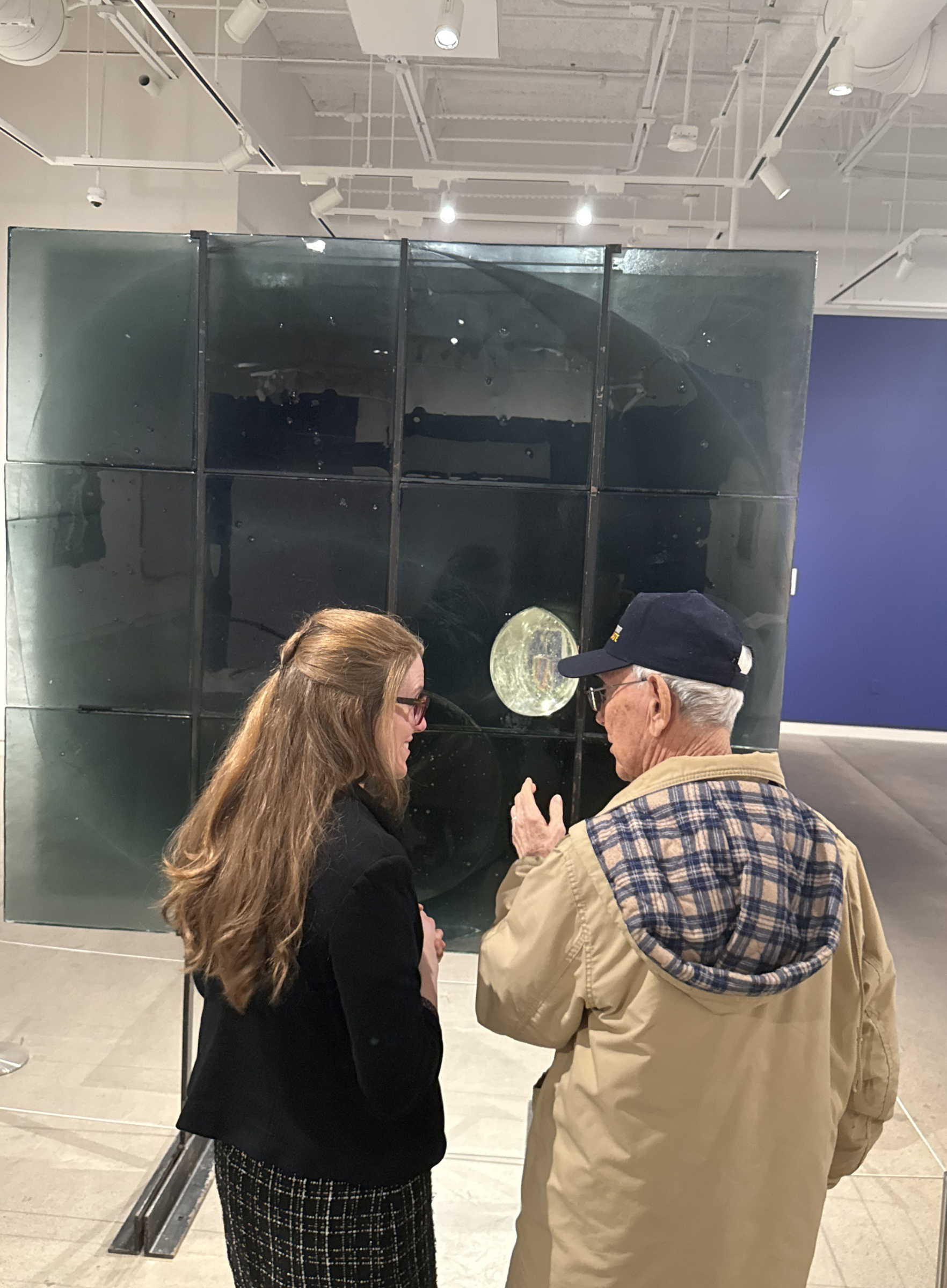
Talking about how this abstract glass sculpture reminds him of his days in the Navy.
This is the beauty of Connections at the CAT: a relaxed, restorative, and normal day out at the museum, serving those for whom such opportunities are increasingly slipping away. This program is specifically designed for individuals with memory loss and their care partners (spouses, children, siblings, or friends). It offers participants a chance to engage in creative thinking and socializing, in a visually stimulating environment that has been carefully set up for their success.
What better impetus for provoking conversation with someone with memory loss than art? The information is visually present, right there in front of them, eliminating the need for recalled memory. Even so, certain artworks may stir up an elusive reminiscence, pulling forth a feeling, idea, or memory buried beneath the pernicious tangles of dementia.
Centering the voices of the participants is key to any successful program, but it becomes particularly important when working with audiences who aren’t always heard.
So, in writing this blog, I reached out to one of our long-time participants, Margaret, to get her perspective, and here’s what she shared:
Laura: What do you enjoy about Connections at the CAT?
Margaret: Everything! The variety of color, artists, art. The art is all new to us, we have never seen it before. Cookies and other people who come, everyone is so nice. Hearing what others have to say, conversations. Everyone is given the opportunity to participate and you may just be. No rushing. It's fun.
Laura: What are the benefits of participating in this program?
Margaret: You don't have to explain yourself, people understand your mind isn't the same anymore and it is okay. It is peaceful, restful, calm—not overwhelming. Just the right amount of socialization.
Laura: What have you learned through your participation in this program?
Margaret: I still love art! How much I look forward to going and the joy it brings. Surprised at how much we really liked artwork we never thought we would.
Margaret's daughter Ann adds, “I do recall certain paintings she did not want to look at as it invoked sadness, uncomfortable memories. Exploring and seeing artwork in a different light engages and challenges her mind. Sometimes Margaret is surprised how unexpectedly a piece invokes an emotion within her. As her dementia progresses, our Mother is still there, and engaging her through art is one way we share with her the enjoyment of art she instilled in our family.”
I offer my deepest thanks to Margaret, Ann, and all the other wonderful participants who make this program so special.
Our program’s title, Connections at the CAT, serves as a reminder of those many connections being made—not only between the person with memory loss and their care partner, but also between CAT staff and the program participants, and among the participants themselves. Most importantly, it recognizes the incredible connection to the inner self that emerges when people with dementia are respectfully offered the opportunity to engage with art.
If you’re interested in joining us, click here for upcoming dates. If you are a memory care program manager at an assisted living facility and would like to bring a group of your residents to the museum, please contact Laura Steefel-Moore, Director of Learning and Engagement at lsteefelmoore@thecat.org to arrange a free visit.