
The Future of Museums is Young
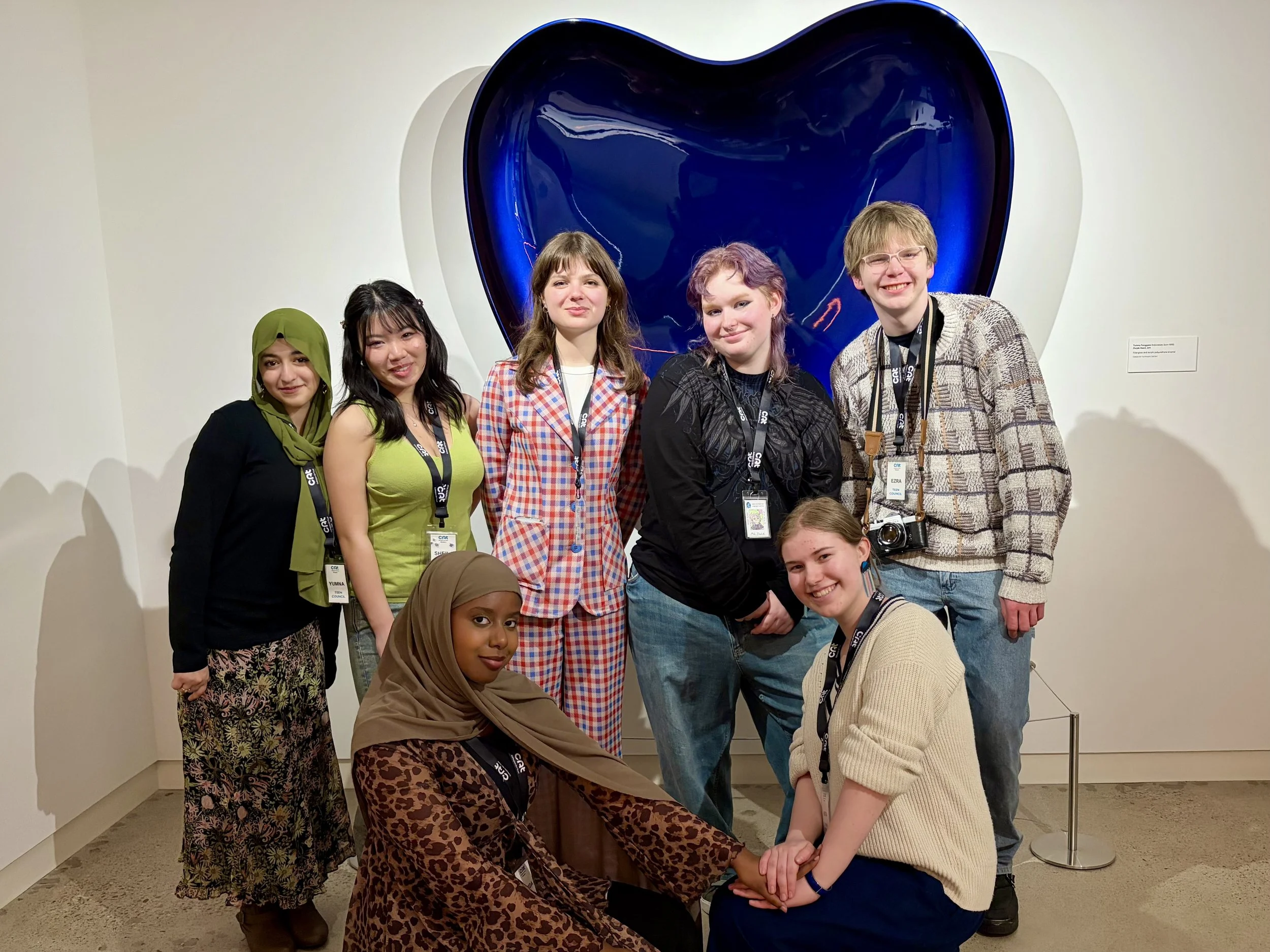
This year’s Teen Council spent a lot of time thinking deeply about why many teenagers don’t engage with museums. The following blog post, which highlights each of the seven council members’ unique voices, serves as a thought exercise about why teens feel uncomfortable in museum spaces and what the Teen Council does to counteract that discomfort.
When I am 60 years old, old enough to belong in museums, I am going to ask all of the questions I have. When I am old enough to belong in a museum, I am going to invite all of my friends. I am going to attend events. I am going to feel included. I am going to sound smart and I am going to feel cultured. When I am old enough to belong in a museum, I am going to do everything I want to do now, and I am not going to worry about looking immature or foolish. Because who questions why an elderly person is in a museum? They belong there. They are old enough and wise enough and have seen enough to understand all of the big, important things that happen in a museum. But as teens, when we step into a museum, we feel questioned, unsure, and timid. We are afraid of being seen as rowdy, unrefined, jokesters, or just too young to fit in. This feeling is not just a stand-alone event, limited to serious exhibits and stuffy events. For many teens, museums can feel like an unattainable location that they have to wait to mature into.
—Nora Fielder, Eden Prairie High School, Class of 2027
Museums have a reputation for being composed and serious, which can put pressure on visitors. This is especially true for teenagers who are often characterized as loud or immature. However, you really shouldn't have to be serious in museum spaces.
Of course, being respectful is still important, but why can't we laugh at an artwork if we find it funny? What is so wrong about that? Art can be anything. It can be deeply serious, it can be heart-wrenching, but it can also be funny, or it can be both at the same time.
Teenagers aren't afraid to acknowledge that. And when you allow yourself to look at art from a deeper perspective of just seriousness, you can find whole new meanings.
—Jason Skupien, Lakes International Language Academy, Class of 2026
Seriously (or un-seriously), we don’t have to ban ourselves from having fun in a museum! The nonchalance epidemic, while outrageously pervasive, is not something we’re forced into. So much of what’s made our time at the CAT enjoyable ishaving fun and not taking ourselves too seriously. Like when we work on fun art projects for kids to do at Family Night when waiting for their food at Churchill St. Restaurant. When we sit down and think about what project we should make for the kids, I personally don’t bother wondering if my idea is polished and professional. I just blurt out whatever idea comes to mind or bounce ideas off my fellow members, because the Teen Council is the sort of place where that’s ok. We base all the art projects for Churchill St. Restaurant off actual artworks in the gallery, but more importantly on how we interpret the work ourselves.
It’s very important that the long-suffering and critically underrepresented teen is given space in a museum to express themselves. And beyond promoting creativity and collaboration at the CAT, we wanted to create an environment where other teens could come and connect with the artworks too. So, we planned and executed our first big event: Night at the Museum! A teen-only event with tons of fun activities people don’t traditionally associate with museums. As we’ve said, the idea that museums must be quiet and deathly serious is one that we wanted to move away from. That’s why, when we were planning the night, we knew we had to make sure it was anything but serious. From the karaoke to the photobooth, it was about making sure that everyone had fun in the museum.
And more than that, seeing the excited and happy faces of people my age at Night at the Museum made me realize just how important it is to build spaces like these, where we can express ourselves freely.
—Sajida Mohamed, Irondale High School, Class of 2026
Many of today’s youth may feel as if museums are boring spaces where the unspoken rule is to stay quiet, act serious, and merely observe. That is precisely why the CAT is dedicated to creating an environment where every visitor is invited to participate, share ideas, and be celebrated. Programs like the Teen Council allow students to have an active role at the museum and focus on connecting with younger audiences.
We have the opportunity to provide feedback on activities, help with event planning, and learn what it truly takes to curate an exhibition. Being on the Teen Council gives such valuable hands-on experiences and can definitely spark interest for future careers in museums or the arts.
Like abstraction in art—where shapes, lines, and colors encourage the viewer to think freely rather than follow strict rules—museums are moving away from rigid expectations and becoming more open to creativity, individuality, and different perspectives from teen voices. Through outreach programs, events, and social media, the CAT is expanding their efforts to make the museum much more welcoming and accessible to younger generations. By directly involving teens in the process, we hope to create a future in which teens are empowered to combat past stigmas and redefine museum culture.
—Sheila Thach, Columbia Heights High School and PSEO, Class of 2026
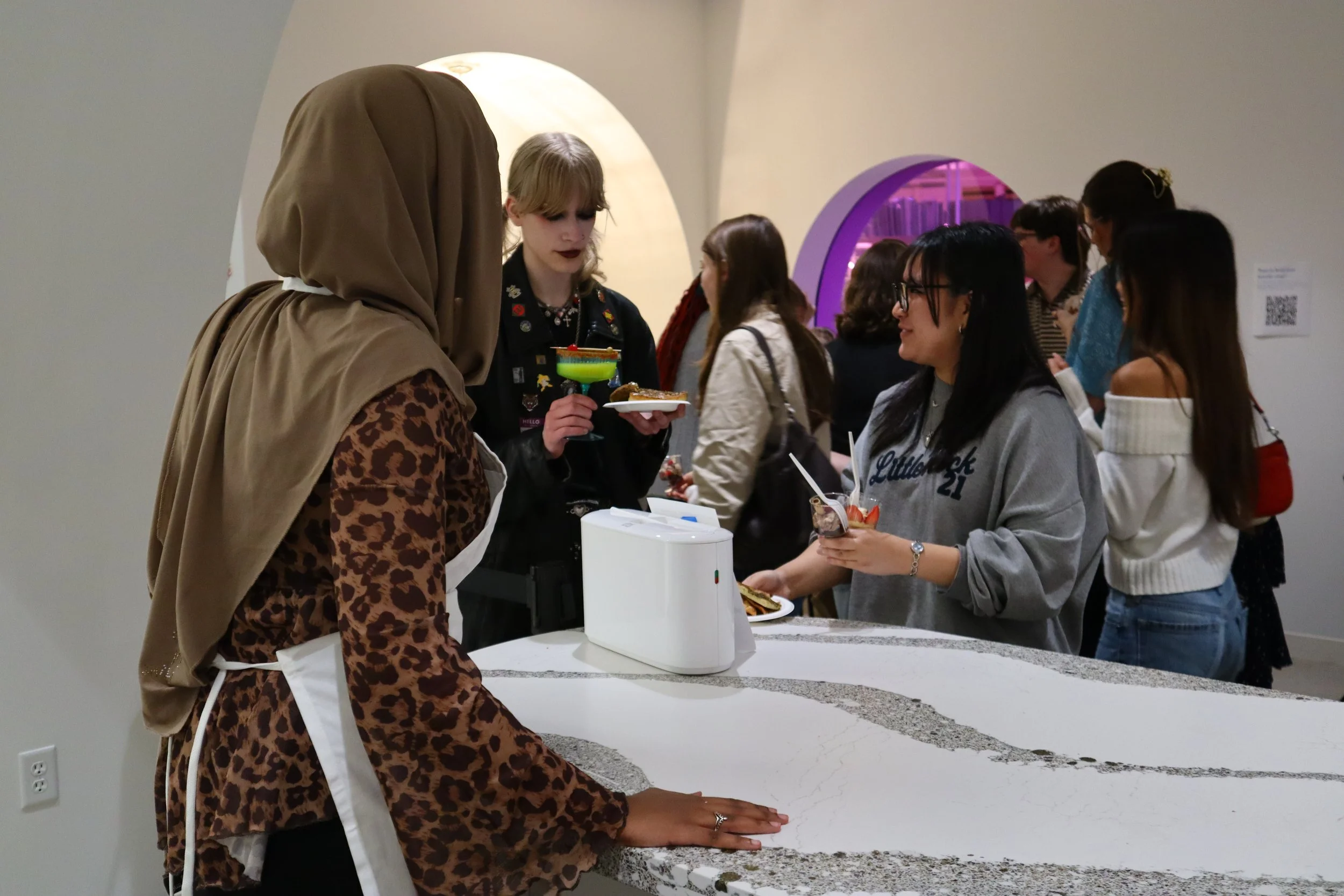
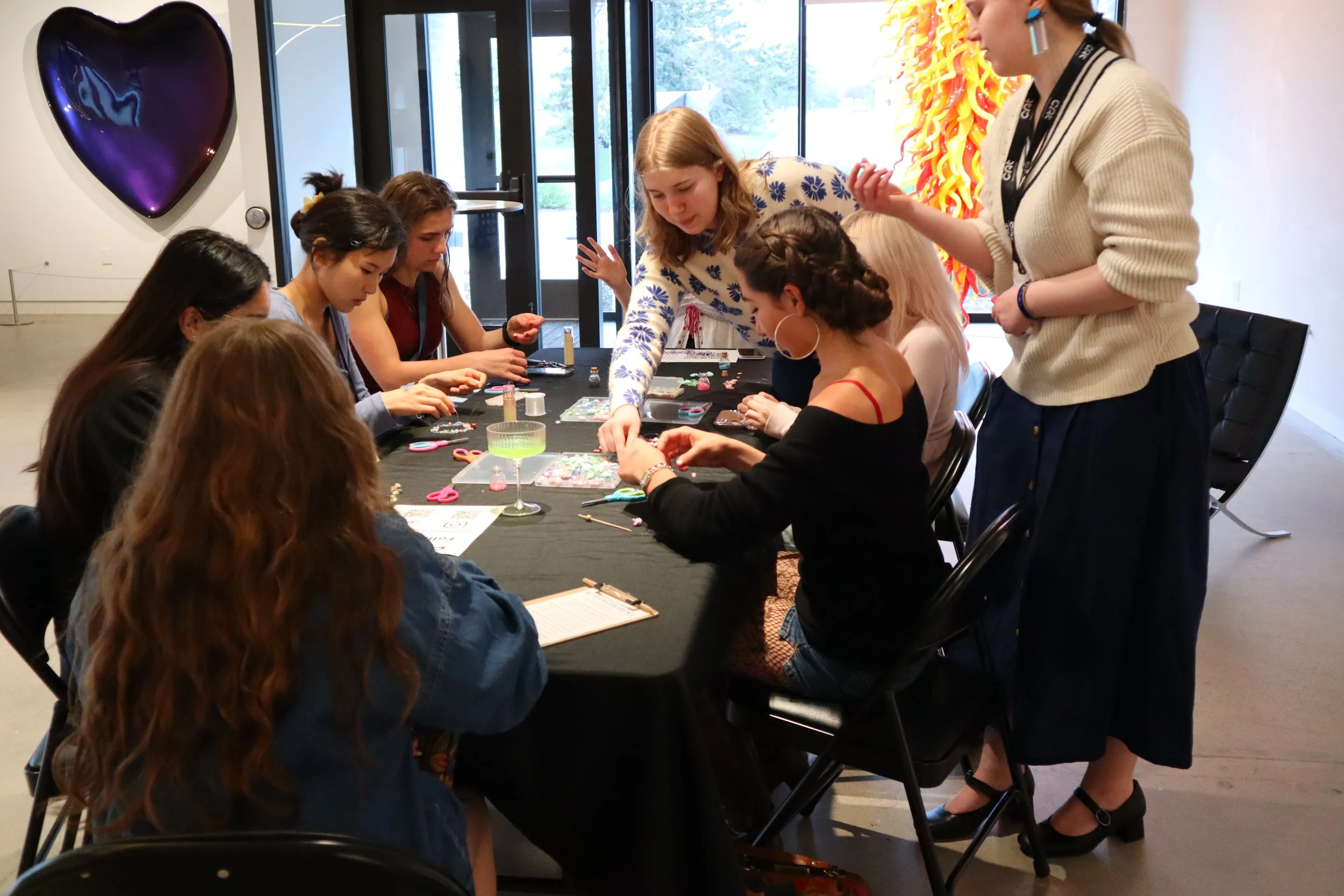
On April 25th, we hosted the first-ever teen night event, Night at the Museum, planned by the CAT Teen Council. We had more than 50 teens come to the event, and it was quite a success if I do say so myself, especially considering all the planning we put into this and seeing the pay off with the number of guests that came and had fun. We had several exciting activities for people to participate in, such as Blooket quiz game competitions involving the abstract art in our exhibition to win fun prizes, a bead bracelet/keychain craft-making table, a scavenger hunt for participants to think more deeply about art itself, and even a DJ for karaoke where anyone could choose a song and belt their hearts out.
There was also delicious food that we had catered from Holy Land Deli and Nawaabs Catering, both locally owned small businesses, as well as a fun custom mocktail bar with several different flavors to taste. The food and drinks were definitely a hit! One of our very own members, Jason, manned the Polaroid photo booth where our guests could get photo ops and bring them home as a little souvenir to look back on the fun times they had at our event.
Everyone enjoyed adding songs to our collaborative playlist that serenaded us throughout the night. And all of this was free to our guests! We can’t wait for next year and the second annual CAT Teen Night!
—Ezra Berend, Homeschool and PSEO at Inver Hills Community College, Class of 2027
On a recent balmy May afternoon, a few teens from our cohort signed up to volunteer at a children's event, called CAT Kids. We could have done anything that afternoon. We could have studied to escape the foreboding guilt of the ACT, or we could have riskily roller skated down cracked sidewalks. Maybe we would have lounged around at home, scrolling online from the comfort of our beds. From the plethora of activities we could have engaged in, we chose to spend our time at the museum. I hope I can speak for all of us when I say that the event was the most enriching use of our afternoon, both for ourselves and our community.
At the kid’s event, there was a level of self-awareness of being teenagers that I think my fellow CAT Teens can attest to. We suddenly felt notably old in the eyes of the child visitors, and perhaps surprisingly youthful to their parents. Many of the children participating in the crafts were highly skilled for their ages, creating artful masterpieces: colorful polka-dotted notecards and sparkling beaded magnets. During a craft, a young boy even showed us his advanced coding software, promptly making us wish we had honed in on our technology skills as a young kid.
This feeling reminds me of a term I learned in my French class, called jeunes vieux. Roughly, it translates to the idea of suddenly feeling old for your age. It can also express feelings of premature responsibility. Despite the term’s questionably pessimistic connotation, (which I do not want to associate with!), I feel that it can encapsulate some of the stressors that many teens face when visiting museums. Many fear that their presence is unsuited for ‘academic’ or ‘specialized’ environments, such as art museums. I have known teens that choose to bypass museums entirely, because they are afraid that they will seem out of touch with the expansive museum-world surrounding them. It can be intimidating.
Adolescence is an odd state of transition. It’s marked by simply trying to find your way. We search for who we are, what we want to do, and how to make meaningful impacts. But wait—hold on a minute. Reel it back. Don’t museums encourage these exact discoveries?
I would like to argue that museums are currently a place for all visitors, despite trivial things like age. If the Cafesjian Art Trust Museum invites both children and adults, why should teenagers feel too embarrassed to join in on the fun?
This leads me to the importance of the Cafesjian Art Trust Teen Council. This program has opened the door to museum spaces for many of us. It has bridged that awkward adolescent gap, squashing our apprehensions. In the past several months, I can truthfully say that we have carved a substantial niche for ourselves. This could not have been accomplished without the support of the CAT’s team. Importantly, our program would also not be possible without the interest and passion of our teens. Our mutual cooperation has pushed us to accomplish significant milestones, such as our massive Night at the Museum event.
Meaningful connection, inclusion, and dedication will be yearly keystones in the CAT Teen Council. The unrelenting kindness we have experienced has helped our teens feel more welcomed, comfortable, and wanted in the museum. We have become eager to step up, because we know that we are valued and can make a tangible impact.
I wish for the prosperity of our CAT Teens in the upcoming years. I am undeniably certain that we will be able to attain it!
—Zoe Buzan, Mounds View High School, Class of 2027
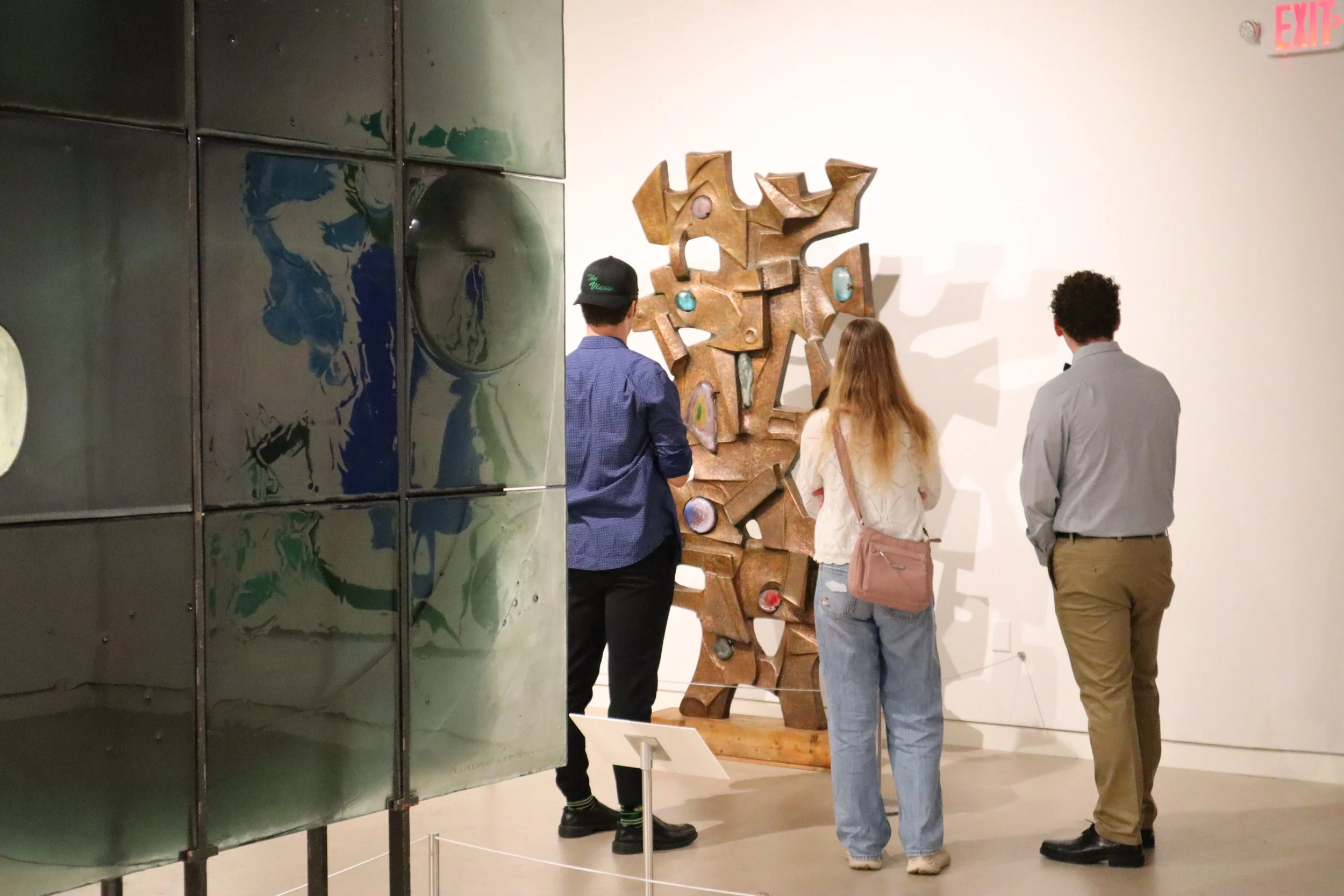
Museums are often thought of as places that preserve the past, but they also have the power to shape the future. When teens are encouraged to participate instead of simply observe, museums become more than quiet galleries, they become spaces for conversation, experimentation, and connection. Programs like the CAT Teen Council show that younger audiences are not disconnected from art and culture, they simply want opportunities to engage with them in meaningful ways.
As museums continue adapting to include more diverse perspectives and interactive experiences, they challenge the stereotype that these spaces are only meant for certain kinds of people. By welcoming teen involvement, museums are becoming more dynamic, creative, and representative of the communities around them. In doing so, they are not only changing how young people view museums, but also redefining what museum culture itself can become.
—Yumna Ali, Columbia Heights High School, Class of 2026